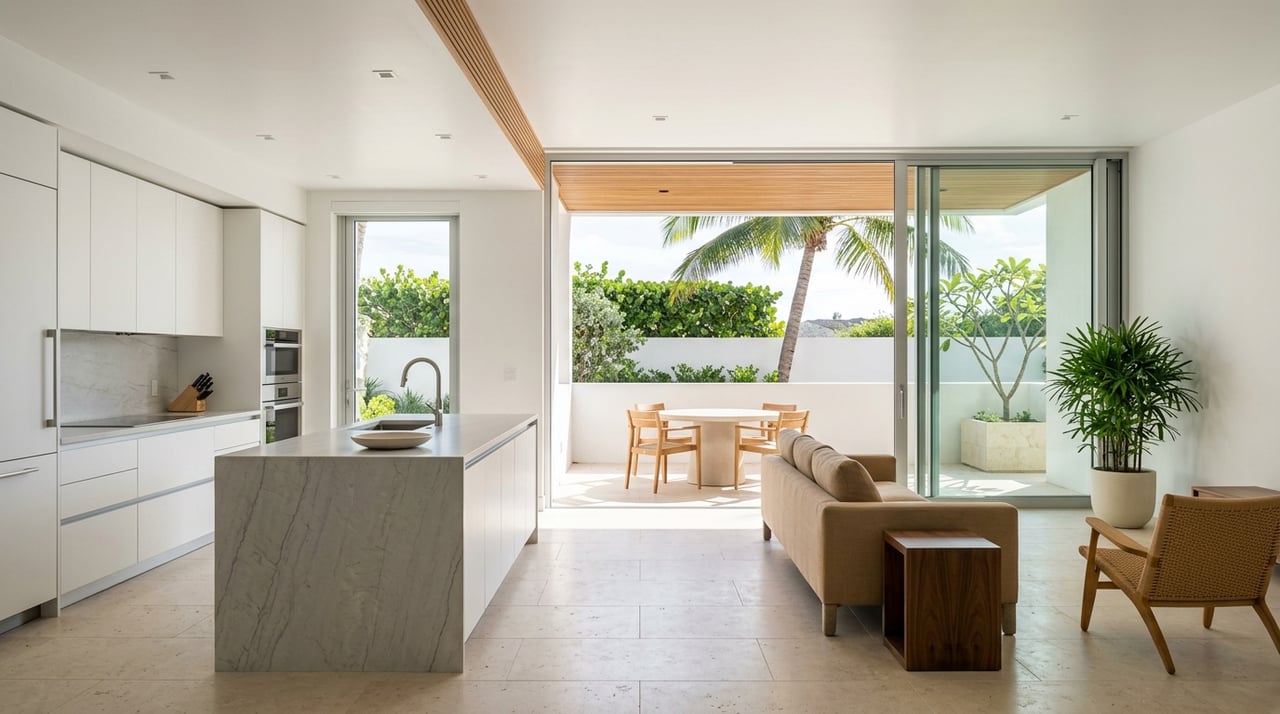
Thinking about buying a vacation rental home in Dorado? It is easy to see the appeal. Dorado offers beach access, resort-style amenities, and a convenient location about 35 minutes from San Juan, but buying here takes more than falling in love with the lifestyle. If you are considering a second home or income-producing property, this guide will help you understand demand, rules, seasonality, and key planning points before you move forward. Let’s dive in.
Why Dorado attracts vacation-rental buyers
Dorado stands out because it blends coastal living with metro access. The municipality sits on Puerto Rico’s north coast along the Atlantic, and the local directory lists a population of 34,017 across 60.4 square kilometers. For many buyers, that combination creates a market that feels both destination-driven and practical.
Tourism sources also position Dorado as an upscale area known for beachfront resorts, golf courses, upscale neighborhoods, and high-end accommodations. That matters if you are evaluating long-term appeal for guests. A location with an established travel identity can support stronger interest from visitors already searching for this type of stay.
Vacation-rental property types in Dorado
If you picture only beachfront villas, the market is broader than that. Dorado’s tourism directory includes house and villa rentals, condo and apartment rentals, small inns, guest houses, resorts, bed and breakfasts, and unique rentals. That gives buyers several entry points depending on budget, goals, and preferred management style.
The municipal short-term-rental ordinance also defines short-term rentals broadly. It can include houses, apartments, cabanas, villas, and other movable or floating unit concepts. In simple terms, Dorado is not a one-format vacation-rental market.
What drives vacation-rental demand
A big reason buyers look at Dorado is that residential-style lodging is already a common choice in Puerto Rico. According to the Puerto Rico Tourism Company’s 2024 visitor profile, 47% of visitors stayed in private residences, compared with 22% in hotels and 20% in short-term rentals. That suggests travelers are comfortable choosing home-style accommodations during their stay.
The same visitor profile found that 93% of visitors came from other U.S. jurisdictions, and 63% were Puerto Ricans living outside the island. For buyers, that points to a broad visitor base with familiarity and repeat-travel potential. It also supports the idea that a well-positioned home in Dorado may appeal to leisure travelers, returning island families, and guests looking for more space than a hotel provides.
Dorado amenities that support stays
Dorado benefits from a mix of beach and golf-oriented attractions. Tourism sources highlight Dorado Beach, a Ritz-Carlton Reserve, a 1,400-acre luxury resort with three golf courses. They also point to Embassy Suites by Hilton Dorado del Mar Beach Resort, Kikita Beach, and Ojo del Buey.
Kikita Beach is especially notable because it is described as being surrounded by restaurants, beach houses, and apartment rentals. For a buyer, this reinforces an important point: guests are not only booking a property, they are booking access to a setting. In Dorado, that setting often includes beach time, dining, and resort-adjacent experiences.
Seasonality matters in Dorado
Vacation-rental demand in Puerto Rico follows a clear seasonal pattern, and Dorado buyers should expect the same general rhythm. Islandwide 2024 lodging data show occupancy peaking in March at 88.7%, staying strong in February at 85.1% and December at 82.5%, then dropping to 57.9% in September. Average daily rates followed a similar trend, reaching $350.83 in March and falling to $217.16 in September.
For you as a buyer, this means income expectations should be grounded in seasonality. Winter and early spring are likely to be stronger periods, while late summer and early fall may be softer. That does not make Dorado a weak market. It simply means your underwriting should reflect a business with high and low periods rather than steady year-round performance.
Dorado short-term rental rules to know
Before buying, it is important to understand that short-term rentals in Dorado are regulated at both the Puerto Rico Tourism Company level and the municipal level. If stays are fewer than 90 consecutive days, the Puerto Rico Tourism Company requires the owner to register as an innkeeper, collect a 7% room occupancy tax, and file a monthly declaration by the 10th day of the following month.
These room-tax rules apply broadly to studios, apartments, homes, villas, and other short-term rental properties. Noncompliance can bring fines of $500 per day, up to $25,000. That alone makes early due diligence essential.
At the municipal level, Dorado’s current framework is Ordinance 7 (2021-2022), as amended by Ordinance 3-2025. Under the 2025 amendment, a host must obtain a municipal license that is valid for one year. The ordinance also requires several supporting items during the application process.
Dorado license requirements
Depending on the property and ownership structure, required items can include:
- Puerto Rico Tourism Company innkeeper registration
- Evidence of compliance with the territorial plan
- Evidence of compliance with restrictive covenants or HOA rules
- CRIM certifications
- Proof of municipal patent payment
- Platform disclosure
- Exterior photos
- A third-party management contract, if one is used
The ordinance also uses annual license fees that scale based on the number of residences or movable units being licensed. If you are comparing one property versus a small portfolio, this may affect your operating costs.
Operating limits owners should plan for
Buying the property is only one part of the decision. Dorado’s ordinance says short-term-rental properties cannot host commercial or social events, may not lose their residential character, and may not display commercial signage. Properties are also subject to municipal inspection.
The ordinance further states that properties under state or federal subsidy programs do not qualify. Repeat violations can lead to fines, suspension, or revocation of the license. Hosts, operators, intermediaries, and platforms are also expected to keep occupancy-night records available upon request.
This is why a vacation rental in Dorado should be viewed as an operating business. Good guest management is not just about reviews. It is part of staying compliant.
Why HOA and condo review is critical
One of the most important pre-purchase questions is whether the community allows short-term rentals at all. The Dorado ordinance specifically references compliance with restrictive covenants and HOA rules. That means municipal approval alone may not be enough.
If you are considering a condo, townhouse, or planned community home, review the governing documents carefully. Restrictions on lease length, guest access, parking, noise, or common-area use can directly affect whether the property works for your goals.
Management can make or break the investment
Strong operations matter in every market, but Dorado’s rules make management especially important. The ordinance places responsibility on hosts and operators for guest behavior and for preserving neighborhood quality of life. That means systems and oversight matter from day one.
Before you buy, think through the operational details that shape both guest experience and compliance:
- Cleaning turnover
- Guest screening
- Parking logistics
- Noise control
- Maintenance response times
- Local oversight if you live off-island
- Whether you will use third-party management
For second-home buyers and remote investors, this step is often where a promising property either becomes workable or not.
Weather planning is part of ownership
Because Dorado is coastal and Puerto Rico’s Atlantic hurricane season runs from June 1 through November 30, storm planning should be part of your budget and due diligence. Owners should think about backup power, water and drainage contingencies, insurance review, and reserves for weather-related repairs.
This is not about alarm. It is about preparation. In a coastal market, resilient ownership planning helps protect both the property and your operating timeline.
How to evaluate a Dorado vacation rental purchase
If you are seriously exploring the market, approach the purchase with both lifestyle and business questions in mind. Dorado can support premium vacation-rental demand, but the best opportunities are usually the ones that work on paper and in practice.
Here is a smart starting checklist:
- Confirm the property can legally operate as a short-term rental
- Review HOA, condo, and restrictive covenant rules
- Estimate high-season and low-season performance assumptions
- Budget for the 7% room occupancy tax and reporting obligations
- Understand municipal licensing requirements and renewal timelines
- Plan for management, cleaning, maintenance, and guest communication
- Review storm readiness, insurance, and reserve needs
- Coordinate with local legal, tax, and lending professionals as needed
The Puerto Rico Tourism Company also states that it provides visitor orientation and technical assistance to investors. That can be a useful starting point as you build your due diligence team.
The bottom line for Dorado buyers
Dorado offers a compelling mix of location, visitor appeal, and property variety. It benefits from strong travel visibility, established resort and golf amenities, and a market where residential-style lodging is already a mainstream choice. For the right buyer, that can make it an attractive place to own a second home or investment property.
At the same time, success here depends on more than choosing a beautiful home. You need to understand the rules, respect seasonality, and plan for active operations. If you approach Dorado with clear expectations and careful guidance, you can make a more confident and well-informed decision.
If you are exploring vacation homes or investment opportunities in Dorado, Ashley Arce offers the kind of thoughtful, high-touch guidance that helps you evaluate the opportunity clearly and move with confidence.
FAQs
What types of vacation rental properties are allowed in Dorado?
- Dorado’s short-term-rental framework broadly includes houses, apartments, cabanas, villas, and other movable or floating unit concepts, and the tourism market also features condos, guest houses, inns, and other rental formats.
What taxes apply to short-term rentals in Dorado?
- For stays of fewer than 90 consecutive days, owners must register as innkeepers with the Puerto Rico Tourism Company, collect a 7% room occupancy tax, and file a monthly declaration by the 10th day of the following month.
Does a Dorado short-term rental need a municipal license?
- Yes. Dorado’s ordinance requires a municipal license that is valid for one year, along with supporting documentation such as tourism registration and proof of compliance with applicable local and community rules.
Can you host events at a vacation rental home in Dorado?
- No. Dorado’s ordinance says short-term-rental properties cannot host commercial or social events and must maintain their residential character.
Is Dorado a seasonal vacation-rental market?
- Yes. Puerto Rico lodging data show stronger occupancy and rates in winter and early spring, with softer performance in late summer and early fall, especially around September.
What should buyers review before purchasing a Dorado vacation rental home?
- Buyers should review municipal licensing rules, Puerto Rico Tourism Company registration requirements, HOA or condo restrictions, operating plans, tax obligations, and storm-readiness needs before purchasing.