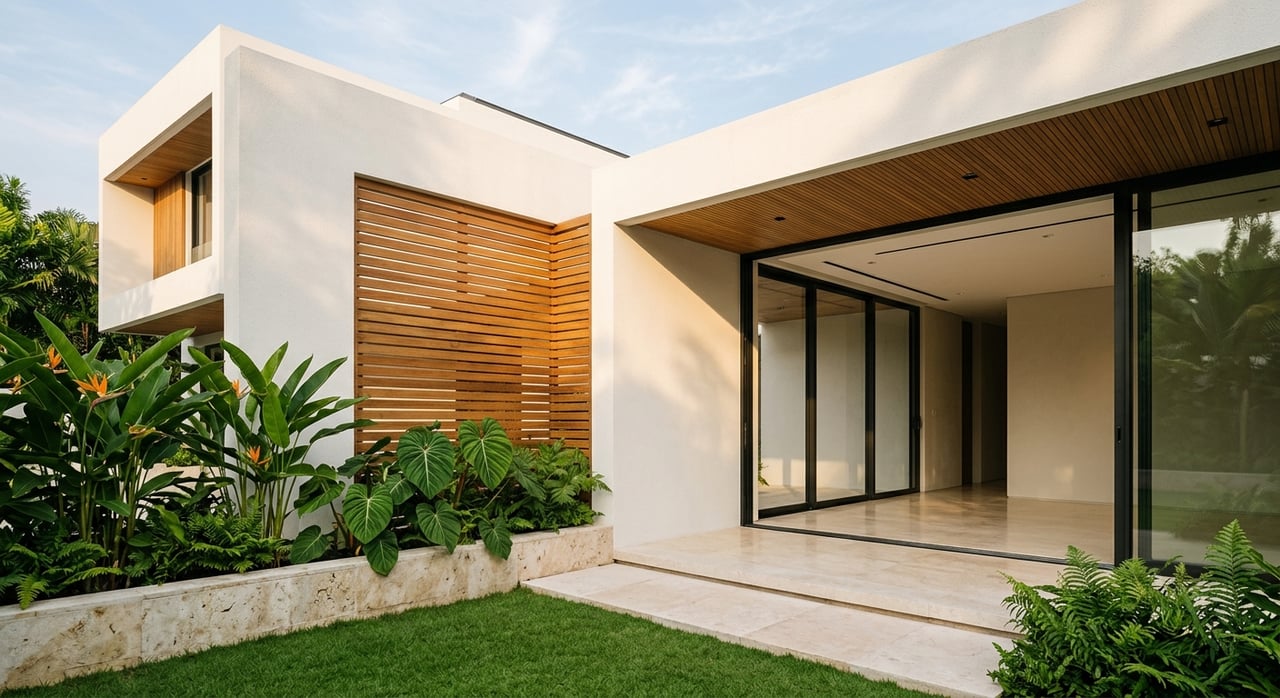
If you have been watching Puerto Rico real estate, you have probably noticed that Dorado plays by a different set of market rules. It is not just another coastal town, and it is not simply an extension of the San Juan metro area. If you want to understand where Dorado fits, what drives its pricing, and what that means for your next move, this guide will help you see the market more clearly. Let’s dive in.
Dorado’s Place in Puerto Rico
Dorado sits on Puerto Rico’s north coast, along the western edge of the San Juan metro area. The municipality spans 23.12 square miles, includes six barrios, and has an estimated 2025 population of 35,891. That location gives you a rare mix of coastal setting and metro access, which helps explain its strong market identity.
In the broader Puerto Rico housing landscape, Dorado stands out as a premium coastal submarket. Islandwide, Puerto Rico has about 1.622 million housing units, with a 69.7% owner-occupied rate. HUD’s July 2025 analysis also notes that only 1.0% of units are available for sale, which points to tight inventory across the island.
That limited supply matters, but Dorado sits in an even more selective tier. Its mix of location, branding, and resort-style inventory places it above the pricing level seen in many other Puerto Rico markets. In simple terms, Dorado is one of the clearest examples of a supply-limited, high-value residential market on the island.
Why Dorado Commands Premium Pricing
Current market snapshots show just how distinct Dorado is. Dorado has 169 homes for sale, a median listing price of $1.39 million, and a median of 56 days on market. By comparison, Puerto Rico overall shows a median list price of $395,000, while a 2025 sales analysis reported a median home sales price of $290,000.
That pricing gap is significant. It tells you Dorado is not competing with the average Puerto Rico market. It is positioned far above the islandwide benchmark and above many well-known metro-area locations as well.
Part of that premium comes from the type of housing available. Official Dorado Beach materials highlight beachfront homes, plantation golf-community homes, estate homes, waterfront homes, and luxury condominiums and penthouses. Some resort communities are currently presented as resale-only, which can further limit entry points for buyers.
How Dorado Compares to Other Markets
Looking at nearby and well-known municipalities helps put Dorado into context. While San Juan, Guaynabo, Carolina, and Bayamón all play important roles in Puerto Rico real estate, Dorado holds a different position on the pricing ladder.
| Market | Homes for Sale | Median Listing Price | Median Days on Market |
|---|---|---|---|
| Dorado | 169 | $1.39M | 56 |
| San Juan | 611 | $654.5K | 61 |
| Guaynabo | 158 | $700K | 64 |
| Carolina | 177 | $475K | 69 |
| Bayamón | 103 | $285K | 61 |
This comparison shows that Dorado is priced above every market listed here, including San Juan. Even prestige San Juan neighborhoods such as Condado at $1.25 million and Santurce at $905,000 trail Dorado’s current median listing price. That makes Dorado a true top-tier market, not just a suburb with higher-end pockets.
Its median days on market are also broadly in line with other premium areas. That suggests buyers are still active when a property is well-positioned, though each listing competes on its own merits. For sellers, that means pricing strategy and presentation still matter, even in a market with strong brand recognition.
Dorado Is More Resort-Led
One of the biggest reasons Dorado feels different is its property mix. Many Puerto Rico markets offer a broad spread of homes, condos, townhomes, and multi-family properties. Dorado, by contrast, leans more heavily toward premium coastal and resort-style living.
Official resort inventory emphasizes custom single-family homes, golf-community residences, estate homes, waterfront homes, and upscale condos and penthouses. Plantation Village, for example, includes three- and four-bedroom condominiums and two-story penthouses. That blend gives Dorado a distinct identity centered on lifestyle, privacy, and curated residential settings.
For you as a buyer or investor, this means Dorado should be understood first as a premium coastal single-family and resort market. It is not primarily a broad condo market in the way some urban areas are. If your goal is a high-end lifestyle property, a second home, or a waterfront residence, Dorado is one of Puerto Rico’s clearest matches.
Demand Drivers Behind Dorado
Dorado’s market strength does not happen in a vacuum. Several broader demand forces shape how this municipality performs within Puerto Rico real estate.
Puerto Rico’s Office of Business Incentives processes and monitors incentive decrees under Act 60, which remains the island’s formal incentives framework. Recent housing-plan language also connects post-COVID housing growth to higher-income development and buyers from the mainland U.S. drawn by tax incentives. In resort-led coastal areas like Dorado, those trends can support continued interest from both owner-occupants and investors.
Short-term rental activity is another factor worth watching. A Center for a New Economy study found more than 30,000 unique short-term-rental listings in Puerto Rico from 2014 to 2020 and concluded that higher short-term-rental density is associated with higher rents and home prices. In a market like Dorado, that can reinforce premium values, especially for properties that appeal to lifestyle-driven and investment-minded buyers.
Dorado’s rental numbers support that premium positioning too. The current median rental price is about $5,950 per month, compared with roughly $2,400 in Guaynabo and $2,150 in Carolina. That does not guarantee investment results, but it does show that Dorado operates in a higher-priced rental tier.
What Buyers Should Understand
If you are considering Dorado, it helps to know that pricing alone does not tell the whole story. The town’s appeal is tied to a combination of coastal location, limited inventory, and a resort-centered product mix. That means two homes with similar square footage may compete very differently depending on setting, community, amenities, and resale positioning.
You should also keep resilience in mind as part of your search. Dorado’s hazard plan identifies earthquake and liquefaction risk, along with strong winds, as the highest-risk categories. Flooding, tsunami, storm surge, and sea-level rise are also relevant, so insurance and property-specific due diligence are important parts of the buying process.
For a buyer, this is where local guidance matters. In a market with premium pricing and varied inventory, clear analysis can help you separate true long-term value from simple headline pricing.
What Sellers Should Understand
If you own in Dorado, your property may benefit from being in one of Puerto Rico’s most recognized premium markets. Still, a strong market name does not replace strategic positioning. Buyers at this level tend to compare carefully, especially when choosing between waterfront homes, golf-community residences, estate properties, and luxury condos.
That is why pricing, presentation, and negotiation strategy matter. Dorado may currently be classified as a buyer’s market, which means sellers need to be thoughtful about how a home enters the market and how it is framed against competing inventory. Well-positioned homes can still move efficiently, but there is no one-size-fits-all approach.
A boutique, hands-on strategy can be especially valuable here. In a market where not every premium property competes the same way, tailored positioning often makes the difference between sitting and standing out.
Dorado’s Real Role in the Island Market
So how does Dorado fit into the Puerto Rico real estate market? The clearest answer is that it sits at the top of the island’s residential ladder as a premium coastal submarket. It is more expensive than Puerto Rico overall, more resort-driven than urban San Juan, and more supply-constrained than lower-priced metro areas like Bayamón.
Its desirability comes from a rare combination of location, branding, and limited inventory. Its opportunity comes from the fact that the market is nuanced, not uniform. Whether you are buying, selling, renting, or exploring an investment, Dorado rewards a strategic approach grounded in local market context.
If you want help understanding how Dorado fits your goals, working with a selective, high-touch advisor can make the process far more clear and efficient. Connect with Ashley Arce for tailored guidance on buying, selling, renting, or investing in Puerto Rico.
FAQs
What makes Dorado different from other Puerto Rico markets?
- Dorado stands out for its premium coastal location, resort-led housing mix, limited inventory, and a median listing price of $1.39 million, which is well above islandwide and metro-area benchmarks.
How expensive is Dorado compared with San Juan?
- Dorado’s current median listing price is $1.39 million, compared with $654,500 in San Juan, placing Dorado above even several high-profile urban submarkets.
What types of homes are common in Dorado?
- Dorado is known for beachfront homes, golf-community residences, estate homes, waterfront homes, and luxury condominiums and penthouses, with a stronger resort-style mix than many other Puerto Rico markets.
Is Dorado a good market for Puerto Rico real estate investors?
- Dorado draws interest from both owner-occupants and investors because of its premium rental tier, limited inventory, and resort-oriented appeal, though property-specific due diligence remains important.
What risks should buyers consider in Dorado?
- Dorado’s hazard planning identifies earthquake and liquefaction risk, strong winds, flooding, tsunami, storm surge, and sea-level rise as relevant factors, so insurance and resilience planning should be part of your evaluation.
Is Dorado considered a buyer’s or seller’s market right now?
- Current market data classifies Dorado as a buyer’s market, which means buyers may have more room to evaluate options carefully and sellers need strong pricing and positioning strategies.